


Building a Safety Plan for Youth: Essential Conversations for Families

When young people go out to parties, parks, beaches, or any social gathering, safety must be a priority.

The recent tragic case of Nolan Wells, an 18-year-old found dead after a Fourth of July outing on Horn Island, has sparked a vital conversation about youth safety, friendship, accountability, and community care. While the investigation continues and facts are still unfolding, this moment calls for families to engage in honest, clear conversations about safety before youth head out.
This post explores how families can build a safety plan with their youth, focusing on communication, trust, and practical steps to protect life and nurture wisdom.
Why Safety Conversations Matter
Youth often face peer pressure and risky situations when they go out. Without clear communication and planning, these moments can lead to dangerous outcomes. The Nolan Wells case reminds us that safety is not just about rules but about care, trust, and accountability.
Families in communities like Mount Vernon and Westchester County have expressed concerns about communication breakdowns, grief, and trauma following incidents involving youth. These concerns highlight the need for trusted support systems and open dialogue.
Safety conversations help youth understand the importance of making wise choices and empower parents and caregivers to stay connected without controlling.
What Families Should Discuss Before Youth Go Out
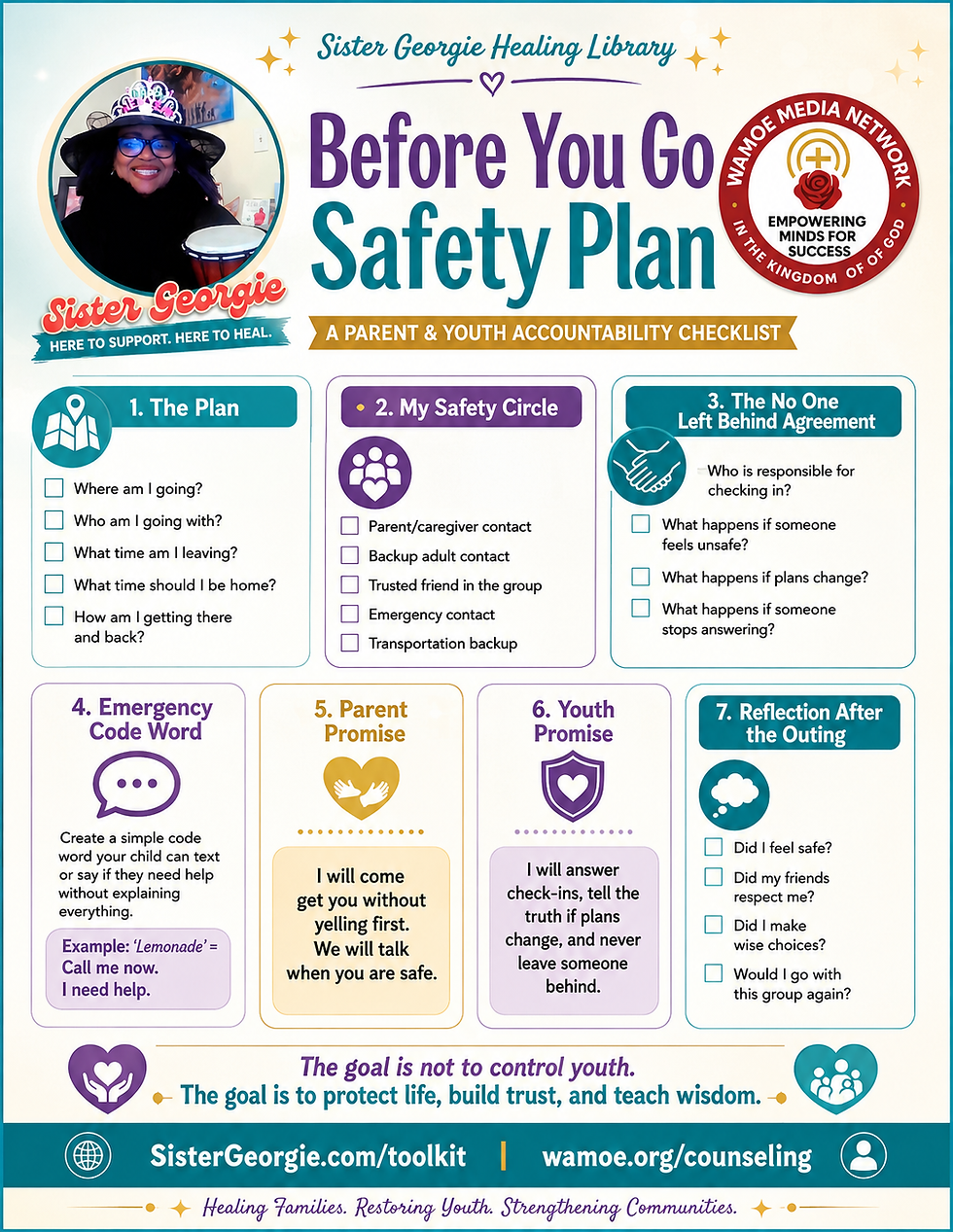
Creating a safety plan starts with asking simple but essential questions. These questions build clarity and prepare everyone for unexpected changes.
Where are you going?
Knowing the exact location helps parents feel secure and allows youth to stay accountable.
Who are you going with?
Identifying trusted friends ensures youth are surrounded by people who care about their well-being.
How are you getting home?
Planning transportation ahead of time reduces risks related to unsafe rides or getting stranded.
Who is your safe contact?
A designated person youth can call if they feel unsafe or need help.
What will you do if plans change?
Discussing alternatives and how to communicate changes prevents confusion and risky decisions.
What is our emergency code word?
A secret phrase youth can use to signal trouble without alerting others.
Who will make sure no one is left behind?
Encouraging responsibility among friends promotes community care and accountability.
How to Create a Safety Agreement Together
A practical way to build trust and prepare youth is by creating a Before You Go Safety Circle. This family activity involves sitting down together and writing a simple agreement that covers:
Destination details
Trusted friends attending
Transportation plans
Check-in times during the outing
Emergency contacts
One adult youth can call without fear of judgment
This agreement is not about control but about protecting life and teaching wisdom. It shows youth that their safety matters and that families are partners in their well-being.
The Role of Community and Support Systems
Safety is not only a family responsibility. Communities play a crucial role in supporting youth and families through:
Providing counseling and mental health resources
Offering safe spaces for youth gatherings
Educating about peer pressure and risky behaviors
Creating networks of trusted adults youth can turn to
Resources like Sister Georgie’s Healing Library and local counseling centers offer valuable tools and guidance for families navigating these challenges.
Reflecting on Scripture for Strength and Guidance
The Bible reminds us of the power of companionship and support:
“Two are better than one… for if they fall, one will lift up his fellow.” — Ecclesiastes 4:9–10
This verse encourages families and communities to work together to protect and uplift youth, reinforcing the idea that safety is a shared responsibility.
Practical Tips for Parents and Caregivers
Start early: Begin safety talks before youth start going out independently.
Listen actively: Show genuine interest in youth plans and feelings.
Avoid judgment: Create a safe space for honest conversations.
Use technology wisely: Agree on check-in texts or calls without invading privacy.
Model responsible behavior: Youth learn from adult examples.
Stay informed: Know the places and events youth attend.
Build a network: Connect with other parents and community leaders for support.
Encouraging Youth Accountability and Friendship
Youth often want to fit in and be accepted by peers. Encouraging them to choose friends who respect safety and responsibility is vital. Families can:
Discuss qualities of trustworthy friends
Encourage youth to speak up if they feel unsafe
Promote group responsibility where friends look out for each other
Reinforce that true friendship includes care and accountability
Safety is a shared journey between youth, families, and communities. By having clear, honest conversations and making practical plans, families can protect their children and build trust that lasts.
For more resources and tools to support these conversations, visit:
Taking the time to prepare before youth go out is an act of love that builds safety, friendship, and accountability for a stronger community.



Comments