


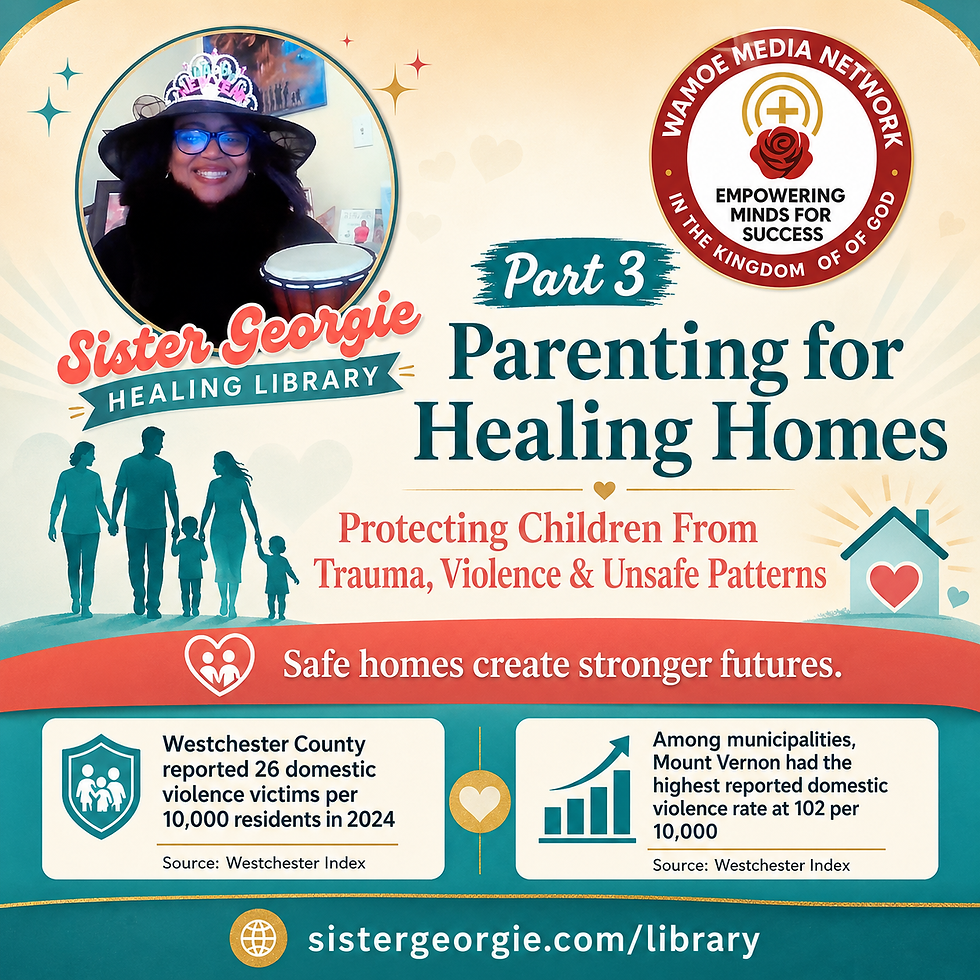
Parenting for Healing Homes: Protecting Children from Trauma and Unsafe Patterns

Some children learn early how to stay quiet, read a room, hide fear, or protect a parent. They may not have the words for trauma, violence, emotional harm, or unsafe family patterns, but their bodies and behaviors often tell the truth before their mouths can.
This September Parenting Guide rebroadcast, Part 18, speaks to one of the most tender needs in family life: helping children live in homes where they are protected, heard, believed, guided, and emotionally safe.
A healing home does not have to be perfect. No family is perfect. But a healing home must be honest. It must be willing to name harm, stop unsafe behavior, seek help, and make safety a family priority.
Sister Georgie serves as a resource center for families who are ready to move from silence to safety, from pain to healing, and from crisis to support. This work matters because children do not grow strong by pretending everything is fine. They grow strong when trusted adults protect them, listen to them, and help them heal.
Healing homes begin by telling the truth
Many families carry pain that no one talks about. It may come from violence in the home, harsh discipline, emotional neglect, unsafe relationships, substance misuse, threats, humiliation, or patterns passed down from one generation to the next.
Silence may feel like protection at first. It may seem easier not to talk about what happened. But silence can leave children confused and alone. A child may begin to believe:
“This is my fault.”
“No one will believe me.”
“I have to protect the adults.”
“Love always feels scary.”
“If I speak up, things will get worse.”
Healing begins when adults make room for truth without shame. That means saying, in age-appropriate ways, “What happened was not okay,” “You are not responsible for adult behavior,” and “We are going to get help.”
This does not mean every detail must be shared with children. It means children should not be forced to pretend that harmful patterns are normal.
Domestic violence exposure, child maltreatment, emotional wounds, and unsafe relationships can affect how children sleep, learn, trust, pray, play, and connect with others. Research and child development guidance consistently show that early intervention, stable support, and safe caregiving can help reduce harm and support healing.
Children need adults who notice. They need adults who do not explain away fear. They need adults who understand that behavior is often communication.
Community safety is a real priority
Family protection is not only a private concern. It is a community concern.
Mount Vernon’s Ready4LIFE program includes domestic violence and child maltreatment among its focal points. That matters. It shows that family protection, safety, and healing are recognized community priorities, not hidden issues that families should carry alone.
When a community names domestic violence and child maltreatment as areas of concern, it also points toward what families need most:
Safe homes where children are not exposed to fear, threats, violence, or intimidation
Trusted adults who can step in before harm grows
Counseling access for children, caregivers, and families
Early intervention when warning signs appear
School and community support when home life becomes unstable
Faith-based and pastoral care that protects the vulnerable and does not excuse harm
Families in Mount Vernon, NYC, and beyond need more than advice. They need clear pathways to support. They need places where they can ask for help without being judged. They need resource centers, counselors, schools, churches, and community programs that know how to respond with care and urgency.
A healing home is not built by one person carrying every burden alone. It is built with support.

Children show distress in many ways
Not every child will say, “I am scared.” Not every child can explain what they have seen, heard, or felt. Some children become loud. Some become quiet. Some become helpful in ways that are too grown-up for their age.
Do not ignore signs of fear, withdrawal, aggression, or silence.
A child who has been exposed to harm may show distress through:
Sudden anger or defiance
Nightmares or trouble sleeping
Clinging, panic, or fear of separation
Withdrawal from family or friends
Trouble focusing in school
Stomachaches, headaches, or frequent complaints of feeling sick
Acting much younger than their age
Trying to control everything
People-pleasing or fear of upsetting adults
Silence after something frightening happens
Aggression toward siblings, peers, pets, or caregivers
Shame, guilt, or self-blame
These signs do not always prove abuse or violence. Children can struggle for many reasons. But they are signals that adults should slow down, listen, ask gentle questions, and seek support when needed.
A helpful response sounds like:
“Your feelings matter.”
“You are not in trouble for telling me.”
“I believe you.”
“It is my job to help keep you safe.”
“We can talk with someone who knows how to help families heal.”
The goal is not to force a child to talk before they are ready. The goal is to make it safe enough for truth to come forward.
Unsafe behavior must be named clearly
Gentleness does not mean minimizing harm. Love must protect.
Children need to learn the difference between safe and unsafe behavior. They also need to see adults act on that difference. If harmful behavior is excused, hidden, joked about, spiritualized, or blamed on stress, children receive a dangerous message.
Unsafe behavior may include:
Hitting, pushing, choking, grabbing, or throwing objects
Threats to hurt a person, pet, or property
Screaming that creates fear
Name-calling, humiliation, or constant criticism
Controlling who someone can see, call, or visit
Forcing secrecy about harmful behavior
Touch that makes a child uncomfortable or afraid
Punishment that causes injury or terror
Adults using children as messengers, spies, or emotional caretakers
Blaming children for adult conflict
Exposing children to violence, intimidation, or repeated chaos
Children need simple language. Safe behavior protects the body, feelings, boundaries, and dignity of others. Unsafe behavior brings fear, harm, secrecy, threats, or confusion.
A child should know that no adult has the right to hurt them, frighten them, touch them in unsafe ways, or demand secrecy about harm. A child should also know who to tell.
This is where families must break secrecy around harmful patterns. Silence protects the pattern. Truth protects the child.
Create a family safety plan before crisis grows
A family safety plan helps children and caregivers know what to do when something feels unsafe. It does not have to be complicated. It should be simple, clear, and realistic.
If there is immediate danger, call 911 or seek emergency help. If calling is unsafe in the moment, the plan should include where to go, who to contact, and how to get help as safely as possible.
A family safety plan can include:
Trusted adults a child can talk to
Emergency contacts saved in safe places
A safe room or safe place to go during conflict
A neighbor, relative, church leader, school counselor, or family friend who can help
A code word that means “I need help now”
A plan for leaving the home if staying becomes dangerous
Important documents and medications gathered when appropriate
Counseling, pastoral care, school support, or community resources
Safety plans should match the child’s age. A young child may only need to know, “Go to this neighbor’s door,” or “Call this trusted adult.” An older child may need more detailed steps.
Do not place the responsibility for adult safety on a child. Children should not be asked to stop violence, calm an unsafe adult, or mediate adult conflict. The plan should protect the child, not burden the child.

Trusted adults help children feel less alone
Every child needs more than one safe adult. This is especially true when the home has experienced trauma, violence, maltreatment, or emotional harm.
Trusted adults may include:
A parent or caregiver who is safe and protective
A grandparent, aunt, uncle, cousin, or family friend
A teacher, school counselor, coach, or youth leader
A pastor, minister, or faith leader who responds with protection and wisdom
A licensed counselor or therapist
A community advocate or support worker
A trusted adult should listen without shaming. They should not pressure the child to forgive before safety exists. They should not tell the child to stay silent to protect the family name. They should not dismiss harm as “discipline,” “drama,” or “private business.”
A trusted adult helps a child feel seen. They also help caregivers take the next right step.
When families seek counseling, pastoral care, school support, or community resources, they are not failing. They are choosing help. That choice can interrupt patterns that may have lasted for years.
Healing often requires more than one conversation. Children may need time to trust. Adults may need support to change behavior, set boundaries, and learn new ways of parenting. Families may need safety services, grief support, trauma counseling, spiritual care, and practical help.
Support is not a sign of weakness. It is part of protection.
Emotional safety is part of a safe home
A home can be physically calm but emotionally unsafe. Children notice when love feels conditional, when mistakes lead to shame, or when adults use silence, threats, or fear to control the house.
Emotional safety means children can be honest without being crushed. It means they can ask questions. It means their feelings are not mocked. It means adults repair harm when they make mistakes.
Emotionally safe homes practice:
Calm correction instead of humiliation
Clear boundaries without threats
Listening before reacting
Apologies when adults cause harm
Respect for a child’s body and privacy
Freedom to tell the truth
Prayer and faith that comfort rather than silence pain
Accountability for unsafe behavior
This does not mean children run the home. Children still need guidance, structure, and correction. But discipline should teach, not terrorize. Guidance should build wisdom, not fear.
“God is our refuge and strength, a very present help in trouble.” — Psalm 46:1
Faith can be a powerful source of courage. Psalm 46:1 reminds families that help is present in trouble, not only after trouble passes. God’s refuge is not a command to hide harm. It is an invitation to seek safety, truth, and support.
Family activity called Our Home Safety and Healing Plan
Set aside a calm time for this activity. Do not use it during an argument or crisis. If the home is currently unsafe, complete this with a counselor, advocate, pastor, school support person, or another trusted adult.
Write the answers down. Keep them somewhere safe.
Who are our trusted adults?
Name at least three safe people each child can talk to. Include phone numbers if appropriate. Make sure the child knows how to reach them.
Ask:
Who listens to you?
Who helps you feel calm and safe?
Who would believe you if you said something was wrong?
What behaviors must stop in our home?
Name the behaviors clearly. Do not soften harm with excuses.
Examples may include:
No hitting or threats
No name-calling or humiliation
No forcing children to keep harmful secrets
No frightening children during adult conflict
No unsafe touch
No blaming children for adult choices
Where can we go for help?
List safe places and support options.
These may include:
A relative’s home
A neighbor’s home
A school counselor
A church or pastoral care leader
A counseling center
A community program
Emergency services when danger is immediate
What does emotional safety look like?
Let each person describe what helps them feel safe.
Examples may include:
We speak without screaming.
We listen when someone says they are scared.
We tell the truth.
We do not punish honesty.
We apologize and repair harm.
We protect children from adult conflict.
What healing support do we need?
Healing support may look different for each family member.
A child may need counseling. A caregiver may need parenting support. A family may need pastoral care, school support, grief support, or help leaving an unsafe relationship. Some adults may need accountability and treatment to stop harmful behavior.
The purpose of this plan is not to shame anyone. The purpose is to protect children and help the whole family move toward healing.

Resources for families seeking support
Families do not have to carry trauma, fear, violence, maltreatment, or unsafe patterns alone. Support can begin with one honest conversation and one safe step.
Visit:
SisterGeorgie.com/library
SisterGeorgie.com/toolkit
wamoe.org/counseling
If there is immediate danger, contact emergency services right away. If a child discloses harm, listen calmly, believe them, and seek appropriate help from trained professionals or protective resources.
Healing homes are built when love becomes protection, truth becomes courage, and support becomes accessible.
Healing Families. Restoring Youth. Strengthening Communities.



Comments