


Parenting Toward a Brighter Future With Support and Hope

Some young people are carrying more than their behavior shows.
A teen who refuses to do homework may feel lost in class. A child who shuts down may be grieving, anxious, embarrassed, or afraid to ask for help. A young person who seems angry may be discouraged because they cannot picture a future that feels possible.
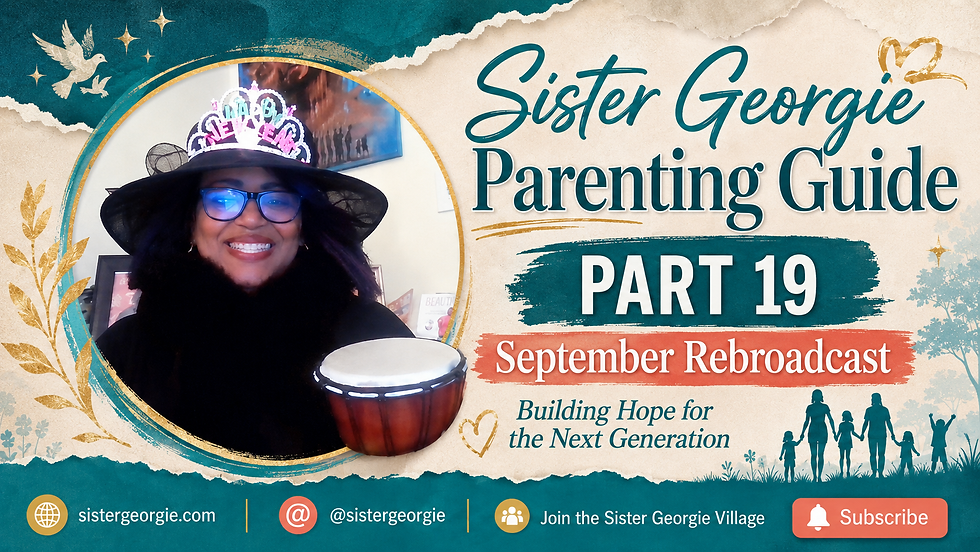
For the September Parenting Guide rebroadcast, Part 19, this Sister Georgie Healing Library entry focuses on a hopeful truth: resilient youth are not built by pressure alone. They grow through support, structure, mentorship, literacy, emotional wellness, faith, and steady community care.
Many youth are not simply “acting out.” Some are overwhelmed. Some feel disconnected from school, church, family, or neighborhood life. Some are under-supported. Some have never had a trusted adult sit with them long enough to ask, “What do you need to make it through this week?”
That question can open a door.

Youth need prevention before they reach crisis
Across NYC, Westchester, and surrounding communities, families, schools, churches, and youth programs continue to see the strain on young people’s emotional health. Anxiety, sadness, isolation, school frustration, family stress, social pressure, neighborhood safety concerns, and uncertainty about the future can all weigh heavily on a child or teen.
Crisis response matters. When a young person is in danger, immediate help is needed. But families also need prevention. Prevention means building protective support long before a youth reaches a breaking point.
That prevention can look simple:
A predictable bedtime and morning routine
A reading plan for a student who is falling behind
A mentor who checks in every week
A youth group, team, choir, club, or service project
A safe place to talk without being judged
A counselor, pastor, teacher, coach, or community leader who notices changes early
This article is for support and education. It is not a substitute for mental health care, medical care, or emergency help. If a young person may harm themselves or someone else, seek immediate crisis support through local emergency services or a trusted crisis line.
Mount Vernon youth need connection and belonging
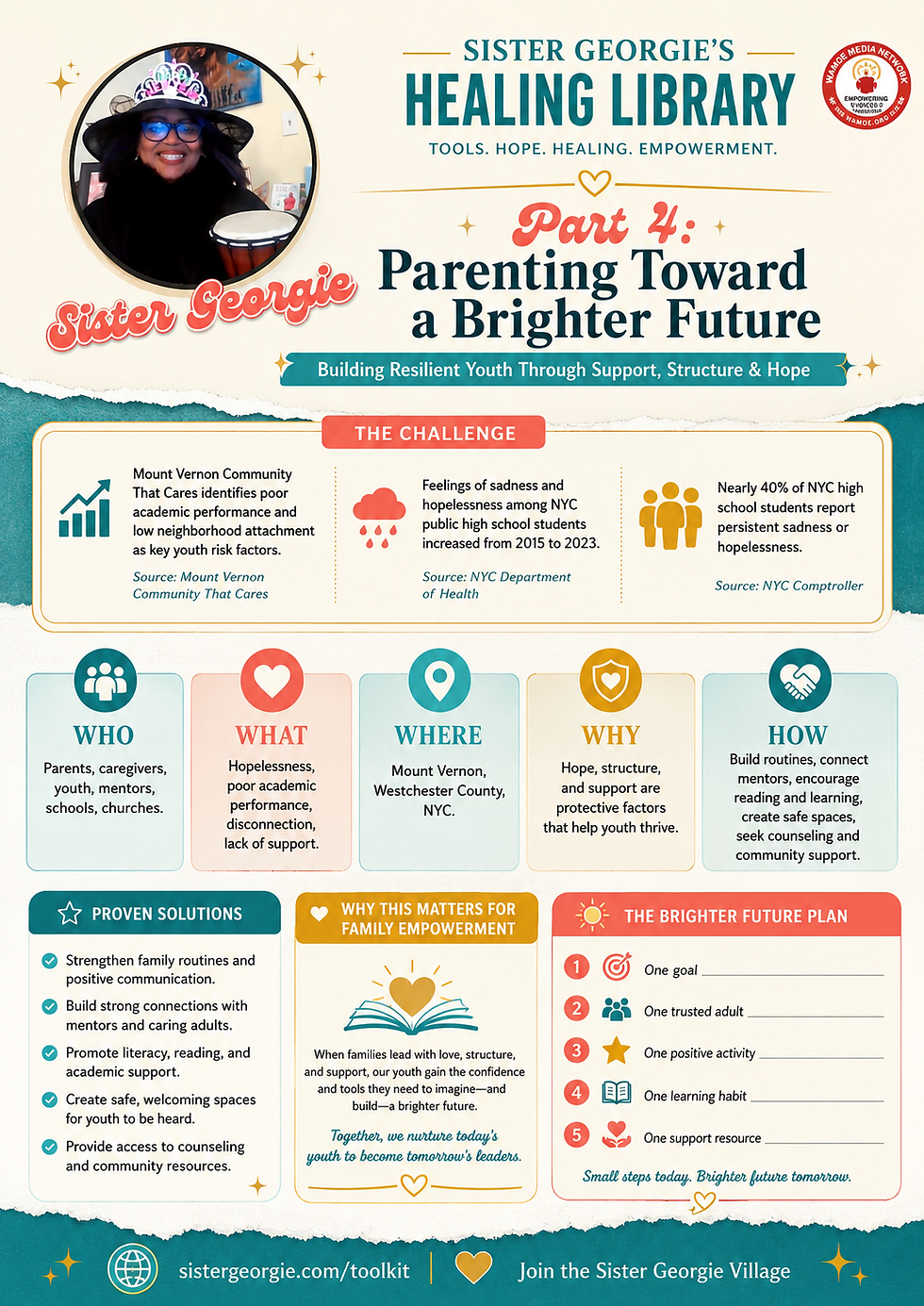
In Mount Vernon and across Westchester, prevention must include strong local connection. Mount Vernon Community That Cares identifies poor academic performance and low neighborhood attachment as youth risk factors.
Those two concerns are deeply connected.
When a young person struggles in school, they may begin to feel ashamed, frustrated, or invisible. They may stop trying because trying feels like proof that they are failing. If that same young person also feels little connection to their neighborhood, church, school community, or positive peer group, they may look for belonging anywhere they can find it.
That is why mentoring, reading support, school connection, and safe activities matter so much. These are not extras. They are protective anchors.
A child who reads with confidence is more likely to participate in learning. A teen who feels seen at school is more likely to show up. A young person who belongs to a positive group has a healthier place to practice leadership, service, discipline, and friendship.
Mount Vernon families, churches, schools, and community leaders can help by asking practical questions:
Which youth are falling behind quietly?
Which students seem disconnected from school life?
Which children need help reading before frustration turns into avoidance?
Which teens need a safe place after school?
Which young people need a trusted adult outside their household?
Which families need support without shame?
Resilience grows when a community notices early and responds with care.

Support and structure help youth feel safe
Young people need love, but love without structure can leave them uncertain. Structure gives youth a sense of safety. It tells them what to expect, what is expected of them, and what support is available when they struggle.
Healthy structure does not mean harsh control. It means clear rhythms.
A child or teen may need:
A regular wake-up time
A simple homework routine
Limits around screens and sleep
Family meals when possible
Set times for reading, chores, rest, prayer, and recreation
Clear consequences that teach instead of shame
Encouragement when they make progress
Structure is especially important for youth who feel overwhelmed. A long lecture may not help. A clear next step can.
Instead of saying, “You need to get your life together,” an adult can say, “Let’s choose one assignment to finish tonight. I will sit nearby while you start.”
Instead of saying, “You never listen,” an adult can say, “We are going to make a plan for after school so you know what comes next.”
Small structure repeated with love can become stability.
Mentorship gives youth a living example of hope
Every young person needs trusted adults who can help them imagine a future. Parents and caregivers matter deeply, but they should not have to carry the whole load alone.
Mentors can come from many places:
Churches and youth ministries
Schools and after-school programs
Sports, arts, and music groups
Community organizations
Extended family and family friends
Barbershops, libraries, recreation centers, and neighborhood programs
Counseling and wellness supports
A good mentor does not need to be perfect. A good mentor is consistent, safe, respectful, and willing to listen. They help youth connect choices today with possibilities tomorrow.
For example, a mentor might help a teen fill out a summer job application, practice reading aloud, prepare for a school meeting, learn a trade skill, join a positive group, or talk through conflict without violence.
Mentorship also helps young people see that their current struggle is not the end of their story. When a trusted adult says, “I see something in you,” that message can stay with a youth for years.
Literacy and learning build confidence
Poor academic performance can affect more than grades. It can shape how a young person sees themselves. When youth fall behind in reading, writing, math, or study skills, they may stop believing they can succeed.
Literacy support is one of the most practical ways to build resilience. Reading strengthens vocabulary, attention, imagination, and school confidence. It also gives youth language for their feelings and choices.
Parents and caregivers can support learning in simple ways:
Read together for 10 to 20 minutes a day
Ask youth to summarize a page, chapter, article, or sermon
Visit the library and let them choose books that interest them
Use audiobooks along with printed books when helpful
Connect reading to real life, such as recipes, job forms, music lyrics, instructions, maps, and Scripture
Praise effort, not just grades
Ask teachers what skill needs the most attention right now
For reluctant readers, start with topics they care about. Sports, faith, history, animals, cooking, cars, fashion, graphic novels, poetry, biographies, and practical how-to books can all open the door.
Learning is not only academic. Skill-building includes cooking, budgeting, repairing, caregiving, public speaking, music, art, coding, gardening, writing, and service. Every new skill tells a young person, “I can grow.”
Emotional wellness needs honest conversation
Some youth act tough because they do not feel safe being honest. Others withdraw because they worry their feelings will be dismissed. Emotional wellness begins when adults create room for truth.
A safe conversation does not always start with big questions. It may begin while riding in the car, cooking together, walking to the store, folding laundry, or sitting after church.
Helpful openings include:
“What has been heavy for you lately?”
“What do you wish adults understood?”
“Who do you feel safe talking to?”
“What is one thing that would make school feel better?”
“When do you feel most like yourself?”
“What do you need help with this week?”
Adults should listen before correcting. That does not mean ignoring harmful behavior. It means understanding what is beneath the behavior so guidance can reach the heart.
If a young person shows signs of ongoing sadness, panic, aggression, withdrawal, substance use, self-harm, school refusal, or major changes in sleep or appetite, seek counseling or community support. Faith and counseling can work together. Prayer, pastoral care, family support, and professional mental health services can all be part of healing.
Faith helps youth hold on to hope
Hope is more than positive thinking. For families of faith, hope is rooted in the belief that God sees the young person fully, even in struggle, and still calls them toward life and purpose.
Scripture gives families language to speak hope over children and teens:
“For I know the plans I have for you… plans to give you hope and a future.” — Jeremiah 29:11
That promise does not mean youth will never face hardship. It means hardship does not get the final word.
Churches can help build resilient youth by offering more than Sunday attendance. They can create mentoring circles, homework help, youth leadership opportunities, grief support, family prayer nights, safe recreation, and partnerships with schools and community programs.
When a young person hears the same message at home, at church, at school, and in the community, it becomes harder for discouragement to drown it out.
That message is simple: Your life matters. Your choices matter. Your future is worth building.
Practical ways to build a brighter future this week
Families do not need a perfect plan to begin. Start with one clear step, then repeat it with care.
Help youth set one reachable goal
A reachable goal should be specific and close enough to act on.
Examples include:
Finish one missing assignment by Friday
Read 10 pages each night
Attend one tutoring session this week
Apply for one youth program
Practice one coping skill when angry
Talk to one trusted adult before making a risky choice
Small goals build trust. When youth experience success, they begin to believe change is possible.
Build daily routines and healthy structure
Choose one morning routine and one evening routine. Keep them simple.
A morning routine may include washing up, eating something, checking the backpack, and leaving on time.
An evening routine may include homework, dinner or snack, reading, preparing clothes, prayer or quiet reflection, and sleep.
Connect youth to mentors and positive groups
Look for safe adults and positive peer settings. Youth need places where they can belong without pressure to harm themselves or others.
This may include a church group, arts program, tutoring group, sports team, library activity, service project, or counseling group.
Encourage reading, learning, and skill-building
Ask, “What do you want to learn how to do?” Then help the young person take one step.
Borrow a book. Watch a safe instructional video together. Ask a skilled adult to teach them. Sign up for a class. Practice at home.
Create safe spaces for honest conversation
Set aside time when the youth can speak without being mocked, rushed, or punished for having feelings. Adults can still set boundaries, but connection should come first.
Celebrate progress, not perfection
Notice effort out loud.
Say:
“I saw you try again.”
“You calmed down faster this time.”
“You asked for help instead of shutting down.”
“You followed through today.”
“That was a step forward.”
Progress grows where it is recognized.
Seek counseling or community support when needed
No family has to handle every struggle alone. Counseling, pastoral care, school supports, youth programs, and community resources can help families move from survival to healing.
Family activity called The Brighter Future Plan
Set aside 20 to 30 minutes. Choose a calm time. Bring paper, pens, and a listening heart.
Each youth identifies five things.
One goal
One trusted adult
One positive activity
One learning habit
One support resource
Something reachable in the next week or month
Someone safe they can talk to when they feel stuck
A group, hobby, program, or service opportunity that builds connection
Reading, tutoring, homework time, skill practice, or study routine
A counselor, pastor, teacher, mentor, youth program, or community service
After each youth fills it out, ask them to choose the first step. Keep the plan somewhere visible. Review it once a week. Celebrate any progress, even if it is small.
The goal is not to force a perfect future. The goal is to help the young person see that tomorrow can be shaped with support.
Resources for continued support
For more encouragement, tools, and family guidance, visit:
A brighter future is not built by chance. It is built through love, structure, support, healing, and community.
Healing Families. Restoring Youth. Strengthening Communities.



Comments